

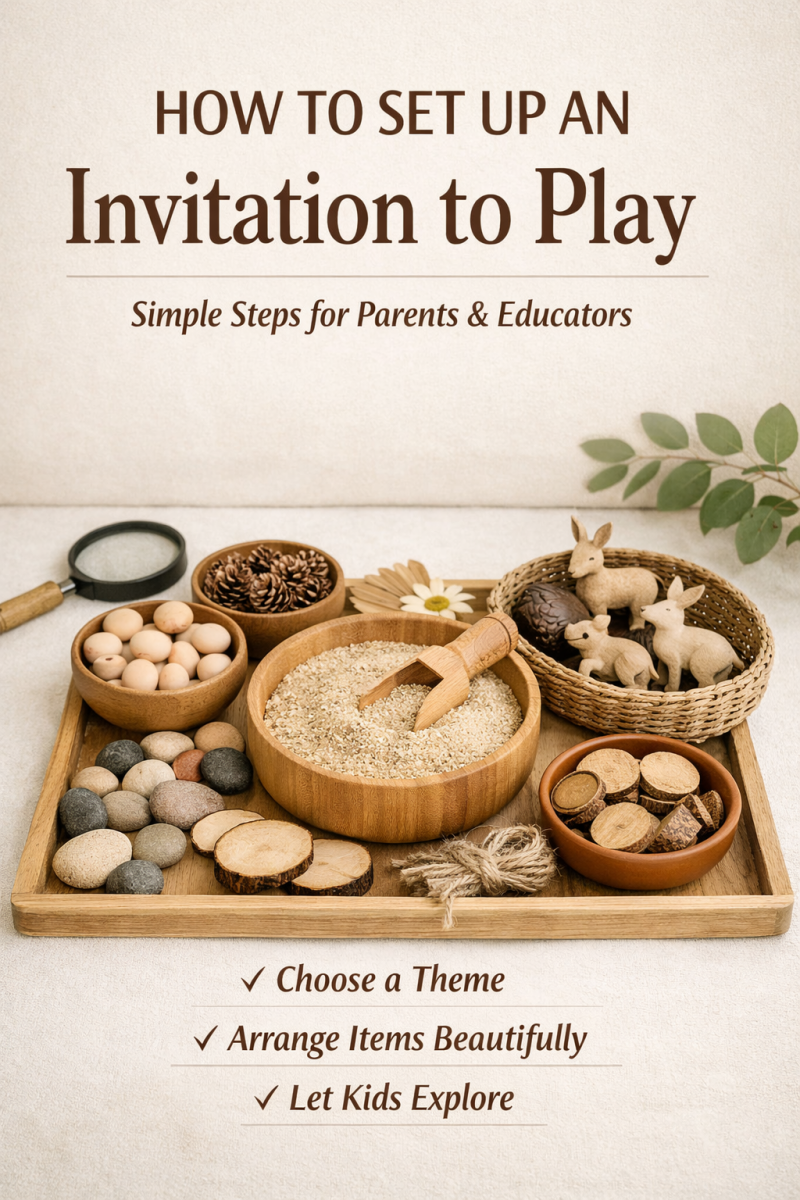
An invitation to play is an open-ended setup that encourages children to explore, create, and learn at their own pace. Instead of giving instructions, you present materials in an appealing way and let the child take the lead. This type of play builds independence, creativity, problem-solving skills, and confidence.
Why Invitations to Play Work
Invitations to play spark curiosity and allow children to follow their own interests. They support fine motor development, sensory exploration, early literacy and numeracy skills, and imaginative play. They also reduce overwhelm by offering a clear, simple starting point.
How to Set Up an Invitation to Play
1. Choose a simple theme. Start with one clear idea such as nature, colours, animals, water play, construction, or shapes. Keeping the theme simple helps children focus.
2. Select three to five materials. Too many items can be distracting. You might include loose parts like buttons or sticks, playdough, sensory bases such as rice or sand, tools like scoops or tongs, or small figurines.
3. Use a defined space. Children engage longer when the play area feels intentional. Use a tray, shallow box, placemat, or small table. A defined space creates boundaries and helps keep the setup tidy.
4. Arrange materials in an inviting way. Keep the layout simple and visually appealing. Group similar items together, use small bowls or containers, and spread items out so they are easy to see. Adding natural elements like leaves, wooden slices, or stones can make the setup feel warm and calming.
5. Step back and observe. Once the setup is ready, let the child explore freely. Avoid giving instructions. Watch how they interact with the materials and follow their lead.
6. Extend the play if needed. If the child is engaged, you can add new tools, offer a simple challenge, introduce a story prompt, or add a second material. Only extend the play if it supports their interest.
Easy Invitation to Play Ideas
Playdough with nature items
Water play with scoops and cups
Pom poms with tongs and a muffin tray
Oats with farm animals
Blocks with cars and road tape
Shells with sand and small containers
Tips for Success
Rotate materials weekly, keep setups simple, use what you already have, and follow the child’s interests. Taking a photo before the child begins can help you recreate the setup later.
Conclusion
Invitations to play do not need to be complicated. With a few thoughtful materials and a simple setup, you can create meaningful play experiences that support learning, creativity, and independence. Whether at home or in the classroom, this approach fits easily into everyday routines.
Add comment
Comments